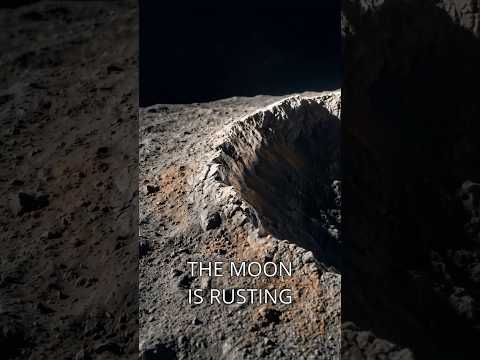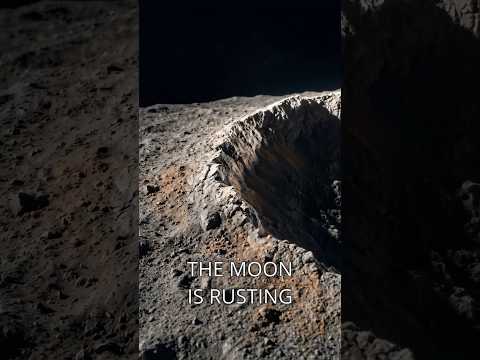
We’re going back… but not how you think. Not to plant a flag. Not to touch the dust.
A Moon Mission That Refuses to Land
Artemis II is NASA’s first crewed flight of the Artemis program, and it does something that feels strangely incomplete: it sends astronauts all the way to the Moon… and then keeps going. They’ll loop around it, watch the surface slide beneath them, and come home without setting a boot down. That’s not hesitation—it’s strategy. Because before you can return to the Moon, you have to prove you can survive the journey there again.
The First Time Since 1972—And That’s the Chilling Part
The last time humans left low Earth orbit was Apollo 17 in 1972. That means Artemis II isn’t just “another mission.” It’s a return to a kind of distance we haven’t tested with people in more than 50 years. Imagine driving a car once as a teenager, then trying it again after half a century—except the road is space, the ditches are radiation, and the tow truck is 240,000 miles away. The Moon is close in cosmic terms, but it’s far enough that rescue becomes a word, not a plan.
Orion and SLS: A Doorway That Has to Hold
To make this trip, Artemis II rides on NASA’s Space Launch System (SLS), a rocket built to throw heavy things—like a crew capsule—out of Earth’s grip. On top sits Orion, the spacecraft that has to behave like a small, sealed world. It needs to keep air clean, manage power, control temperature, and stay stable while space tries to spin it, freeze it, and cook it. This isn’t a “can we launch?” question. It’s a “can we live inside this machine for days while Earth shrinks to a bright coin?” question.
Ten Days of Small Problems That Can Become Big Ones
The mission is expected to last around 10 days, long enough for tiny issues to grow teeth. A sensor that misreads, a valve that sticks, a computer that glitches—on Earth those are inconveniences. In deep space, they’re plot twists. Artemis II is designed to stress-test the full routine of human deep-space travel: navigating far from Earth, communicating with delay, and trusting systems that can’t be fixed by a quick supply run. The Moon won’t just be scenery. It’s the moment the crew finds out whether the whole stack truly works as a team.
Why “Just Orbiting” Might Be the Hardest Part
Not landing sounds easier, but it removes a comforting illusion: that the goal is the surface. For Artemis II, the goal is the path—leaving Earth, reaching lunar distance, swinging around the Moon, and returning safely through the violence of re-entry. Coming home is its own ordeal. Orion will hit Earth’s atmosphere at blistering speed, wrapped in plasma, relying on its heat shield like a knight relying on armor in a fire. If Artemis II nails this, it’s a loud, undeniable message: humans can operate beyond Earth again, with modern systems, under modern expectations.
The Real Reason This Mission Matters
Artemis III is aiming for a landing, but Artemis II is the lock being tested before the key gets turned. It’s proof that the rocket can deliver, the spacecraft can protect, and the crew can endure the deep-space rhythm without a safety net. And it’s a reminder that returning to the Moon isn’t a single dramatic leap—it’s a careful rebuild of an ability we once had, then let go.
The eerie truth is this: the Moon never moved… we did—and Artemis II is the moment we dare to cross the dark gap again.