The night sky looks permanent.
The Moon rises like it always has—silver, familiar, dependable—hanging over oceans and cities as if it were bolted to the universe.
But it isn’t.
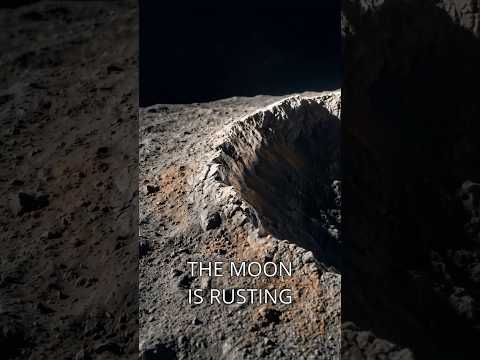
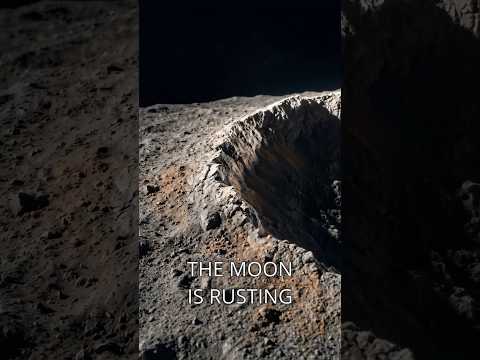
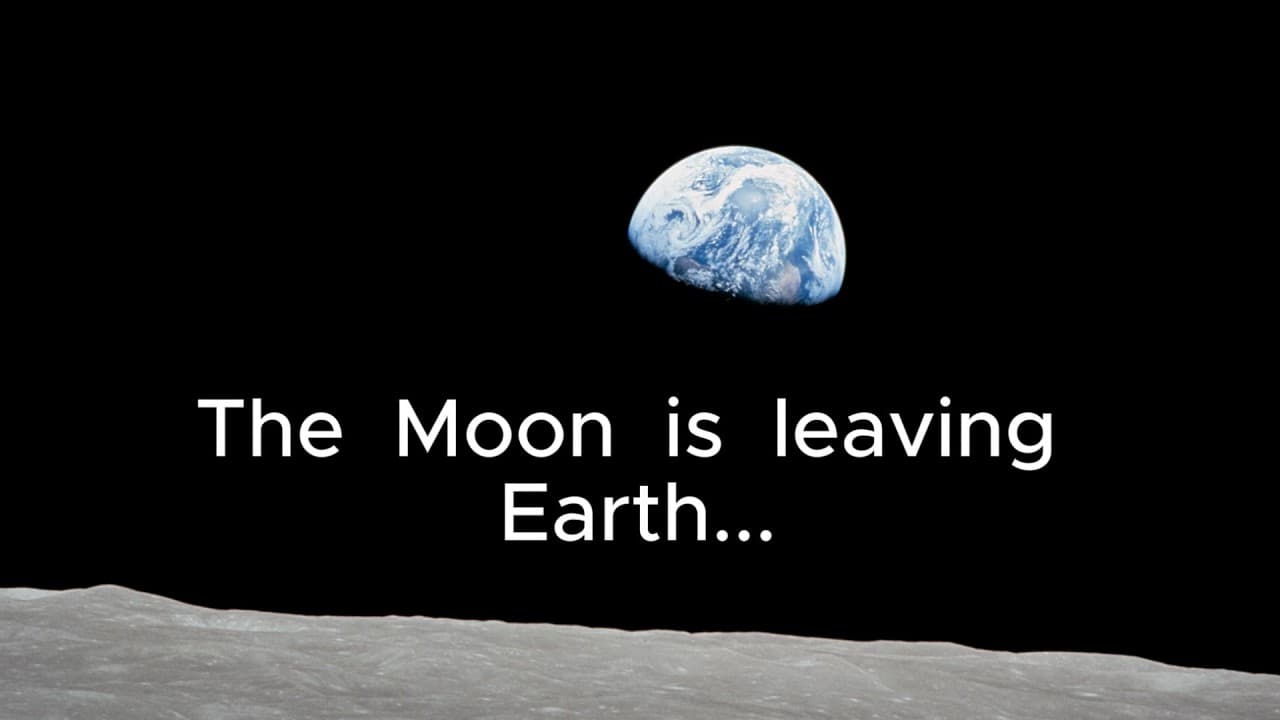
Right now, while you read this, the Moon is slipping away from Earth. Not dramatically. Not with a sudden lurch. It’s drifting outward at about 3.8 centimeters per year—roughly the speed your fingernails grow.
That number sounds like nothing. A coin’s width. A quiet measurement in a lab.
And yet it’s the kind of “nothing” that, given enough time, rewrites a planet.
Because the Moon isn’t just a decoration. It’s a gravitational partner locked in a slow dance with Earth, trading energy back and forth. That trade controls our tides, tugs on the length of our days, and steadies the tilt of our world like a hand on a spinning top.
So if the Moon keeps drifting… what changes first? What changes last? And what does Earth become if the Moon is far away—or gone?
Tides: The Planet’s Slow Breathing
Stand at the edge of the ocean and you can feel the Moon without seeing it.
The sea is never still. It rises and falls on a schedule older than any clock humans ever built. We call it the tide, but it’s more like Earth inhaling and exhaling.
The Moon’s gravity pulls hardest on the side of Earth facing it. Water there bulges outward slightly. But gravity also pulls on Earth itself—on its solid rock and mantle—so the planet’s center shifts a little toward the Moon. That creates a second bulge on the far side, where the ocean is left behind, bulging in the opposite direction.
Two bulges. One planet spinning underneath them.
As Earth rotates, coastlines sweep through these bulges, and the water level rises and falls. The Sun joins in too, adding its own tide, smaller but still important. When Sun and Moon line up, tides become stronger. When they pull at right angles, tides weaken.
This is not just beach trivia. Tides stir the oceans. They mix deep water with shallow water, moving heat and nutrients around the globe. They shape coastlines, feed ecosystems, and—long before humans existed—may have helped create the kind of shallow, dynamic shoreline environments where complex chemistry could take off.
Now here’s the twist: the same tidal force that lifts the oceans is also stealing energy from Earth’s spin.
The Hidden Friction That Slows a World
If Earth were a perfect, smooth sphere covered in a perfectly deep ocean, the tidal bulges would point straight at the Moon. There would be pulling, but not much friction.
But Earth is messy.
We have continents that interrupt the flow. We have shallow seas that drag water over the seafloor. We have coastlines that catch and release the moving ocean like a hand braking a wheel.
As Earth spins, the tidal bulges are dragged slightly ahead of the line connecting Earth and Moon. That means the bulge isn’t directly under the Moon—it’s offset.
And that offset matters because it creates a gravitational tug-of-war.
The Moon pulls back on the bulge. The bulge pulls forward on the Moon.
That forward pull adds a tiny bit of energy to the Moon’s orbit, boosting it outward into a higher, wider path around Earth. At the same time, Earth pays the bill by losing rotational energy. Our planet’s spin slows down, ever so slightly.
This is the mechanism. Not magic. Not mystery.
It’s friction.
It’s the ocean rubbing against the planet.
It’s energy being converted into heat and motion, spread through the water and rock.
And it’s measurable.
We know the Moon is drifting away because we’ve bounced lasers off reflectors left on the lunar surface by Apollo astronauts and robotic missions. The round-trip travel time of that light reveals the distance with astonishing precision. Year after year, the numbers creep upward.
3.8 centimeters.
Every year.
Over a human lifetime, it’s a few meters—hardly worth a headline.
But in the language of planets, this is a loud story told slowly.
Time-Lapse Earth: When “3.8 cm” Becomes a Different Sky
Scale is where this starts to feel real.
Imagine rewinding the clock.
Hundreds of millions of years ago, the Moon was closer. Tides were stronger. Earth spun faster. Days were shorter.
If you go back far enough—into the early history of Earth—the Moon likely loomed much larger in the sky, and a day may have been as short as about 5 to 10 hours. Picture a sunrise that arrives twice as often. Picture tides that surge with more force, scraping coastlines and stirring shallow seas with relentless energy.
Now fast-forward.
The Moon continues to migrate outward. It doesn’t mean it will “fly away” into deep space tomorrow. It’s still tightly bound to Earth’s gravity. But the geometry of our relationship changes.
As the Moon gets farther away:
The tides weaken. Gravity drops with distance, and tidal forces drop even faster. The ocean bulges become less dramatic.
Earth’s rotation continues to slow. The braking doesn’t stop—it evolves.
The Moon’s apparent size in the sky shrinks, and with it, the perfect coincidence that makes total solar eclipses possible.
That last one is easy to visualize. Right now, the Moon happens to appear almost exactly the same size as the Sun in our sky, which is why total eclipses are so jaw-dropping: a cosmic alignment that turns day into twilight.
But as the Moon drifts away, it will look slightly smaller. Total eclipses won’t last forever. In the far future, eclipses will more often be annular—rings of sunlight around the Moon—because the Moon won’t fully cover the Sun.
That’s not a danger. It’s just a reminder.
Even the most iconic sights in nature have expiration dates.
But the deeper consequence isn’t about what we see. It’s about how stable Earth stays.
The Moon as Earth’s Silent Stabilizer
Earth doesn’t spin straight up and down relative to its orbit. It tilts.
That tilt—about 23.5 degrees—is why we have seasons. It’s why the Sun climbs high in summer and skims low in winter. It’s why climates and ecosystems are distributed the way they are.
Here’s the unsettling part: a planet’s tilt isn’t guaranteed to stay calm.
Over time, gravitational tugs from other bodies—especially giant planets like Jupiter—can torque a planet’s spin axis. Without something to steady it, a planet can wobble chaotically.
Mars is the cautionary tale.
Mars has no large moon. Its tilt can swing dramatically over long timescales, possibly from near zero degrees to well over 40 degrees. That kind of shift would rewrite where ice accumulates, where deserts form, and how stable a climate can be.
Earth, by contrast, has had a relatively stable tilt for a long time. Not perfectly fixed, but bounded—controlled.
One reason is the Moon.
The Moon’s gravity interacts with Earth’s equatorial bulge and helps keep Earth’s spin axis from wandering too wildly. It’s like adding a stabilizing weight to a spinning top: still spinning, still responsive to nudges, but less likely to tumble into chaos.
That stability has consequences.
Stable seasons mean stable long-term climate patterns. Stable climate patterns make it easier for life to adapt and diversify rather than constantly being thrown into planet-scale upheaval.
So when we say the Moon is moving away, we’re not just talking about a number on a chart.
We’re talking about a stabilizer slowly loosening its grip.
Not today. Not tomorrow.
But over the kind of time that geology and evolution use as their calendar.
Longer Days: The Planet’s Great Slowdown
Earth’s rotation is slowing. This is not speculation—it’s written into the planet.
You can find hints in ancient growth patterns in corals and shells. Some fossil records preserve daily and seasonal cycles, like natural timekeepers. When scientists read those rhythms, they see evidence that there were more days in a year long ago—meaning each day was shorter.
The total length of the year doesn’t change much because that’s set by Earth’s orbit around the Sun. But how many times Earth spins during that orbit can change.
As the Moon recedes and Earth’s spin slows, days get longer.
Right now, the change is tiny on human scales: milliseconds per century. It’s the kind of shift that matters to precise timekeeping, satellites, and astronomy—not to your morning alarm.
But push the fast-forward button far enough and it becomes dramatic.
In the distant future, Earth could have 25-hour days, then 30-hour days, then longer still.
There’s an ultimate endpoint suggested by physics: Earth and Moon could become tidally locked to each other. That would mean the same side of Earth would always face the Moon, and the Moon would always hang over the same region of Earth—like a permanent celestial landmark.
But reaching that state would take an enormous amount of time—so long that the Sun’s evolution becomes the bigger story. Long before Earth and Moon fully lock in that way, the Sun will brighten and change, likely altering Earth’s habitability.
Still, the direction is clear.
The Moon is taking energy.
Earth is losing spin.
And time itself—measured in days—is stretching.
What Happens to the Oceans When the Moon Steps Back?
If the Moon were suddenly farther away, you’d notice it first in the sea.
Tides would soften.
That doesn’t mean tides would vanish completely. The Sun would still raise solar tides, and they would become the dominant rhythm. But the powerful lunar pulse that shapes many coastal environments would fade.
We often think of tides as background motion. In reality, they are a mixing engine.
They churn water through narrow straits and over underwater ridges, helping circulate heat and distribute nutrients. They influence how oxygen reaches deeper waters. They help set the tempo for many coastal species and ecosystems.
We can’t say the ocean would “die” without strong lunar tides—life is resilient and the planet has other mixing mechanisms like winds and currents. But the character of the oceans would change.
Less mixing can mean different circulation patterns.
Different circulation patterns can change how the ocean stores and releases heat.
And that can echo into climate.
So when the Moon retreats, it’s not just pulling away from us in distance.
It’s pulling away from one of the subtle control knobs that tune Earth’s surface environment.
Earth Without the Moon: A Stranger Home
The question “What if the Moon were gone?” sounds like science fiction. But it’s a useful thought experiment because it reveals what the Moon has been doing for us all along.
Take the Moon away and Earth becomes more vulnerable to long-term instability.
The most important change isn’t that nights become darker—though they would. It isn’t that the word “month” loses its original meaning—though it would.
It’s that Earth’s tilt could become less well-behaved over deep time.
A more chaotic tilt could mean extreme shifts in climate zones. Imagine the tropics creeping toward the poles, then retreating. Imagine polar ice forming and melting in strange cycles not just driven by orbital changes, but by the planet’s axis wandering.
Life would still exist, most likely. Life is stubborn.
But the stage would be less stable. The rules would change more often.
And here’s the eerie thing: we tend to treat habitability as a simple checklist—liquid water, atmosphere, right distance from the Sun.
The Moon suggests something subtler.
A planet can have water and air and still be restless.
Sometimes, a world needs a companion.
Not for romance. For physics.
Why This Slow Drift Matters When It’s So Far Away
It’s tempting to shrug. 3.8 centimeters a year is not a crisis.
No one needs to “save” the Moon from drifting away. No one needs to panic about tomorrow’s tide.
The significance is different.
This is a story about how the universe moves objects not with explosions, but with patience.
A small force, applied continuously, can reshape a world.
The Moon’s retreat reminds us that Earth is not a static stage where history happens. Earth is part of a mechanical system, a set of interacting motions—spin, orbit, wobble, friction—slowly exchanging energy.
It also changes how you look at the sky.
The Moon feels ancient because it is ancient. But it is not frozen in place. It has a trajectory.
And it means that the Earth we inherited—the length of our day, the shape of our tides, the steadiness of our seasons—is not a universal default. It’s a particular moment in a long evolution.
Even our most familiar rhythms are temporary.
The Last Look Up
Tonight, the Moon will rise again.
It will paint the ocean with a trembling дорожка of light. It will pull at the hidden water beneath the surface. It will quietly steady the tilt of the planet you stand on.
And it will be a little farther away than it was for your grandparents.
Not enough to see.
But enough to matter—if you have the patience of mountains and the memory of oceans.
There’s something humbling in that.
We live inside a cosmic time-lapse. The big changes don’t arrive with sirens. They arrive with millimeters, with tides, with friction, with the soft transfer of energy from one orbit to another.
The Moon is leaving.
Not as a goodbye, not as a loss, but as the next step in an ancient dance.
And the deeper you feel that slow drift, the more the world around you changes—from a place that seems permanent into a place that is alive with motion, balance, and time.